Posts

Showing posts with the label Battery capacity

BMW i3 Long Term Battery Capacity Report: Better Than Expected

Image
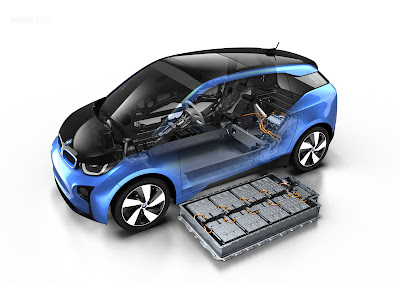
The heart of any electric vehicle is its battery. This BMW i3 cutaway shows the battery removed from drive module.  When it comes to electric cars, it’s all about the battery. Well, it’s not quite that simple, but given how important the battery is to the cost, range and performance of the vehicle, it’s pretty close. When someone is considering purchasing their first electric car, they will certainly have a lot of questions.   The one question that seems to be on nearly everyone’s list is: “How long will the battery last?” The problem is, it’s been very hard to answer that question authoritatively because we just haven’t had enough data.   That’s because modern electric cars that are powered by high-voltage lithium ion battery packs have been on sale for less than ten years, and long term testing results simply weren’t available.   In fact, the Nissan LEAF was the first high-volume all-electric car brought to market, and that model has only been on ...
Incorrect State Of Charge Readings Causing Problems For i3 Owners

Image
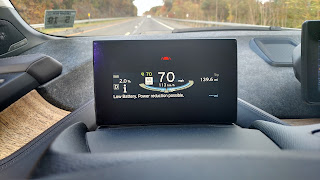
With the i3 REx, Reduced Power can occur if the operator continues to use more energy than the REx engine can produce. Examples of this would be continued high speed (over 70 mph) driving or long, sustained hill climbing. However this new problem that has plagued some i3 owners isn't caused by over-taxing the REx.  Someone once said, "You could always tell the pioneers by the arrows in their back."  A recent software bug has cropped up that seems to be affecting many of the early build and higher mileage i3s that are mostly driven by the early adopters. The problem causes the car to go into reduced power mode, or in some cases shut down without warning when the display shows about 5% - 6% battery remaining. In mid 2016, BMW released a software update, (version 16-07-501) that was supposed to correct the issue, but for some unknown reason it didn't work on all of the vehicles. They then sent out letters to the early buyers to inform that they need a software update. Re...

The 2014 (60Ah) i3 REx vs The 2017 (94Ah) i3 REx

Image
255 miles of combined range? This range estimator is probable a little more optimistic than real life, but I definitely believe 200 miles is possible with the new 2017 i3 REx.  What a difference three years makes.  I was able to secure one of the first 2017 BMW i3 REx cars that made its way into US dealer inventory, compliments of Chris Chang, Sales Manager at BMW of Bloomfield here in New Jersey. The vehicle is mostly the same as my 2014 i3 REx, the one big exception is it has the new 94 Ah battery cells, which increase the overall battery capacity from 21.6 kWh to 33 kWh without increasing its physical size. That was necessary, since this isn't a redesigned i3, so the battery modules had to fit in the existing battery tray. The 2017 i3 REx in Fluid Black next to my "Moloughney Red" wrapped 2014 i3 REx As much as I wanted to check out the moonroof option that this car had (finally the moonroof is available in the US!), there is no denying the single most important improv...

2017 BMW i3 Specs Revealed With Some Surprises

Image
Fluid Black as pictured and Protonic Blue Metallic will most likely be very popular colors in 2017 While many of the changes that the 2017 BMW i3 will be getting have already been announced; such as the availability of the anticipated 94 Ah battery cells, the new Protonic Blue color and a moonroof option, I've now learned there are also more subtle changes in the US for the new model year. First, and most interesting, is the revelation that BMW will indeed continue to offer the i3 with the current 60 Ah battery, offering a lower range and lower cost i3 alternative. This is something that I don't believe has been reported on any other EV news site to date. I speculated that BMW would do this back in March, when I wrote this post dedicated to the topic. BMW hasn't made any statements regarding offering two battery options, and made no mention of it in the the official press release   of the 2017 i3. Still, my sources tell me otherwise. The 60 Ah i3 will only be offered as a ...

Here's Why an i3 Battery Upgrade Currently Doesn't Make Sense

Image
The 2017 i3's 33.4 kWh battery pack is the same physical size as the current 21.6 kWh pack. BMW purposely designed the battery tray this way, so that future battery upgrades would be possible. Allowing the i3's battery to be upgraded was always BMW's plan. The concept of upgrading an electric vehicle's battery pack is certainly not a new one. In fact, it's something that many EV owners have been vocal about wanting to see offered. So the news that BMW will begin a battery upgrade program for their current i3 owners is good indeed, even if it may be something that isn't really necessary, or practical - yet. The big news in BMW i's May 2nd press release was, as expected, that BMW would be upgrading the i3's battery cells from 60 Ah to 94 Ah. This means the 2017 i3 will have an EPA range of 114 miles, up from the current 81 miles per charge. These new battery cells are physically the same size as the currently used cells, but can hold 50% more energy and ar...

It's Official: The 2017 BMW i3 Will Have New Battery, Moonroof Option, New Colors & More

Image
The 2017 i3 comes with 40% more range than the current model. It's also available in a nice new color: Protonic Blue The worst kept secret of the BMW i3 is officially no longer a "secret". BMW has formally announced that the 2017 i3 will have a new, longer range battery pack. They are indeed using the new Samsung 94 Ah battery cells that I speculated they would five months ago . Just as I predicted the new battery pack is increasing from 21.6 kWh to 33.4 kWh, which in an increase in capacity of about 50%. However the range of the i3 BEV will only increase by 40% from 81 miles per charge to 114, which is less than i predicted. That's because BMW is now using a larger buffer (the difference between the total battery capacity and the usable capacity) and also because the car now weighs more (roughly 100 lbs more) because the new higher capacity cells weigh slightly more than the ones they replace.  The slight increase in weight will likely only have a very minor effect o...